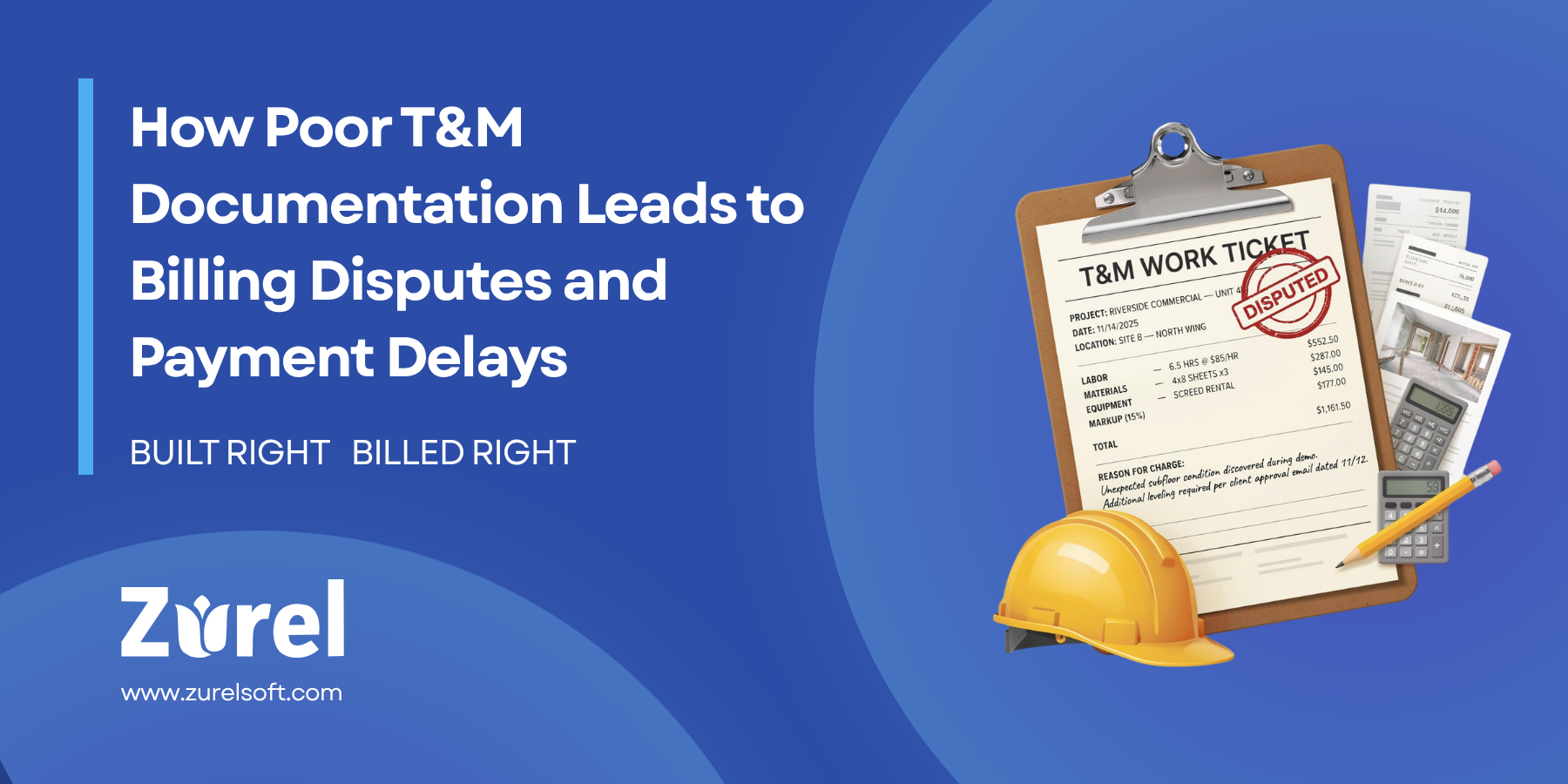

In construction, Time and Materials Tickets are more than routine paperwork. They provide clear proof of the extra work completed and the labour, materials, and equipment used. Subcontractors often encounter unexpected site conditions, additional labour requirements, or scope changes that fall outside the original contract, making accurate T&M documentation essential for recovering the full cost of the work performed. Poor documentation and manual processes can also create hidden costs for contractors, including missed charges, administrative work, and billing delays.
Time and Materials work often moves quickly, but the approval process does not always keep pace. A contractor may complete the work, record the resources used, and then wait days or weeks for the client to approve the T&M Ticket. During that time, the contractor must continue covering payroll, purchasing materials, renting equipment, and paying other project expenses.
When T&M Ticket approvals are delayed, contractors may be unable to prepare invoices, collect payment, or accurately track project revenue. What appears to be a minor administrative delay can eventually affect cash flow, profitability, and client relationships. A structured digital approval workflow helps contractors submit tickets sooner, provide clients with more convenient review options, and move approved work into invoicing faster.
What Causes Delayed T&M Ticket Approvals?
Several problems can prevent contractors from collecting approvals on time.
Tickets Are Submitted Too Late
Field employees may wait until the end of the day, week, or project phase before completing their T&M Tickets.
By the time the client receives the ticket, they may no longer clearly remember the work, the jobsite conditions, or the conversation that authorized it. The client may then request additional information before approving the charge.
Recording and submitting tickets while the work is still fresh makes the information easier for both the contractor and the client to verify.
Paper Tickets Are Lost or Damaged
Paper T&M Tickets can be left at the jobsite, misplaced in a vehicle, damaged by weather, or lost while being transported to the office.
A lost ticket may need to be recreated from memory. The contractor may also need to contact field employees to confirm labour hours, material quantities, or equipment usage.
These additional steps delay the approval request and increase the risk of missing or inaccurate information.
The Client Is Not Available to Sign
Traditional approval often depends on finding an authorized client representative at the jobsite.
The representative may leave before the ticket is ready, work at another location, or only visit the site occasionally. Field employees may then need to return later, leave the ticket with someone else, or ask the office team to follow up.
When approval depends only on an in-person signature, a simple scheduling issue can delay billing for days or weeks.
Ticket Information Is Incomplete
Clients are less likely to approve a ticket when important details are missing. Clear and complete documentation matters because it helps clients verify the work and understand the charges. Learn more about why T&M Ticket details matter in construction.
For example, a ticket may show the total labour hours without identifying the employees, labour classifications, or tasks performed. Material quantities may be unclear, supporting receipts may be missing, or the work description may not explain why the extra work was required.
The client may return the ticket for clarification, delaying approval until the contractor provides the missing information.
Approval Requests Are Easy to Miss
Contractors may send approval requests through email, text messages, paper copies, or informal conversations.
When there is no consistent process, requests can be overlooked or forgotten. The client may intend to review the ticket later but lose track of the message among other project communications.
The contractor may not realize the approval is still pending until the office begins preparing the invoice.
There Is No Consistent Follow-Up Process
Manual follow-up often depends on office employees remembering which clients need to be contacted.
Staff may maintain spreadsheets, email lists, or handwritten notes to track pending approvals. As the number of projects and tickets increases, it becomes more difficult to follow up consistently.
Some tickets may receive multiple reminders, while others remain pending without anyone noticing.
How Delayed T&M Ticket Approvals Cost Contractors Money
Approval delays affect more than paperwork. They can create direct financial consequences for the contractor.
Invoices Cannot Be Sent on Time
Many contractors wait for client approval before including T&M work on an invoice. When a ticket remains pending, invoice preparation may also be delayed. Even after the invoice is submitted, the client may have payment terms of 30, 45, or 60 days.
Some contracts also require T&M charges to be submitted within a specific billing window. If approval delays cause the contractor to miss that deadline, they may lose the opportunity to invoice and get paid for the work performed.
A delay at the approval stage can therefore extend the entire payment cycle and increase the risk of completed work going unbilled.
Cash Flow Becomes Less Predictable
Contractors usually pay project expenses before receiving payment from the client.
Payroll, materials, equipment rentals, fuel, and subcontractor costs may need to be paid regardless of whether the T&M Ticket has been approved.
When approvals and invoices are delayed, the contractor must carry those costs for longer. This can place pressure on working capital, especially when many tickets are pending across multiple projects.
Administrative Work Increases
Chasing approvals requires time.
Field supervisors may need to contact the client repeatedly. Office employees may send reminder emails, make phone calls, search for missing tickets, or ask field employees to explain incomplete information.
This administrative work does not directly contribute to completing the project, but it still uses employee time and company resources.
Billing Disputes Become More Likely
The longer a ticket remains unapproved, the more difficult it may be for the client to remember what happened.
The client representative may question whether the work was authorized, whether the recorded hours are accurate, or whether all materials were used for the stated task.
Timely documentation and approval help confirm the details while the work and site conditions are still familiar.
Completed Work May Go Unbilled
A delayed ticket may eventually be forgotten, lost, or excluded from the final invoice.
This means the contractor may fail to recover labour, material, or equipment costs that should have been charged to the client.
One missed ticket may appear minor. However, repeated across many projects, unbilled T&M work can significantly reduce project profitability.
Project Profitability Becomes Harder to Track
Pending tickets create uncertainty in project financial reporting.
Project managers may see the cost of the work in labour, purchasing, or equipment records, but the related revenue may not yet be approved or invoiced.
As a result, reports may show an incomplete picture of project performance, expected revenue, and profit margins.
Why Manual Approval Workflows Create Delays
A traditional paper approval process often involves several separate steps.
The field employee completes the work, writes the ticket, finds the client representative, obtains a signature, returns the paper to the office, and waits for someone to enter the information into the accounting or billing system.
If the client is unavailable, the ticket may remain unsigned. If the paper is lost, unclear, or incomplete, the office must contact the field team before the process can continue.
Every handoff creates another opportunity for delay.
This process becomes especially difficult when contractors manage multiple crews, clients, and projects. The office may receive dozens or hundreds of tickets, each with a different approval status and supporting documentation.
Without a centralized workflow, it can be difficult to know which tickets are complete, which are awaiting approval, and which require follow-up.
How Digital T&M Ticket Approval Workflows Reduce Delays
Digital workflows connect ticket creation, supporting documentation, timely approval, and office review in one system. This reduces delays caused by lost paperwork, incomplete information, unavailable approvers, manual follow-up, and unclear ticket status.
Prevent Tickets from Getting Lost
Digital tickets are submitted directly from the jobsite and stored in one central system. This removes the need to transport paper tickets and reduces delays caused by documents being lost, damaged, or left in vehicles.
Submit Tickets Immediately
Field employees can record labour, materials, equipment, and work details while the information is still fresh. Tickets reach the client sooner instead of waiting days for paper copies to arrive at the office.
Provide Complete Information
Required fields help crews include clear work descriptions and complete labour, material, and equipment details. Photos, receipts, and other documents can also be attached, reducing delays caused by client questions or missing information.
Offer Flexible Approval Options
Clients can approve T&M Tickets in person, by email, through a QR code, or online. These options prevent approvals from being delayed simply because the authorized client representative is unavailable at the jobsite.
Reduce Administrative Follow-Up
Automatic reminders notify clients when a ticket is still awaiting approval. Office teams spend less time sending emails, making calls, searching for paperwork, or maintaining separate spreadsheets to track pending requests.
Track Approval Status in Real Time
Field and office teams can see whether a ticket is pending, approved, rejected, or returned for changes. This visibility helps them identify delays quickly and follow up before billing deadlines are missed.
Create a Clear Approval Record
Digital workflows record who approved the ticket and when. Keeping the approval, ticket details, and supporting documents together makes invoice preparation faster and reduces delays caused by missing or unclear approval records.
Best Practices for Faster T&M Ticket Approvals
Contractors can improve the approval process by following a few consistent practices:
- Create and submit tickets on the same day the work is completed.
- Use clear descriptions that explain what work was performed and why.
- Record complete labour, material, and equipment details.
- Attach relevant photos, receipts, invoices, and other documents.
- Audit tickets regularly to avoid mistakes.
- Confirm the correct client representative before sending the request.
- Provide approval options that do not require the client to be onsite.
- Use automatic reminders for tickets that remain unapproved.
The goal is to make every ticket easy for the client to understand, verify, and approve.
How Faster Approvals Improve Contractor Cash Flow
Faster approvals allow completed work to move into invoicing sooner, shortening the time between performing the work and receiving payment.
Using a process designed for timely T&M Ticket approvals also gives contractors better visibility into expected revenue and outstanding client charges. Office teams spend less time chasing signatures, while project managers gain more accurate information about project costs, approved revenue, and profitability.
Most importantly, contractors reduce the risk of completed work remaining unbilled.
Reduce Approval Delays with Zurel T&M Tickets
Zurel T&M Tickets provides a structured digital workflow for creating, documenting, submitting, and getting timely approval for Time and Materials work.
Field teams can record work from the jobsite, attach supporting photos and documents, and send complete tickets for client review. Flexible approval methods make it easier for clients to respond, while approval reminders help contractors follow up consistently.
Office teams can view ticket status, access approval records, and move approved work into invoicing without waiting for paper tickets to arrive.
By simplifying T&M Ticket approvals, contractors can reduce administrative work, invoice sooner, and maintain more predictable cash flow.
Ready to Speed Up Your T&M Ticket Approvals?
See how Zurel T&M Tickets can help your team submit complete tickets, provide flexible approval options, send automatic reminders, and move approved work into invoicing faster.
Frequently Asked Questions
About Author